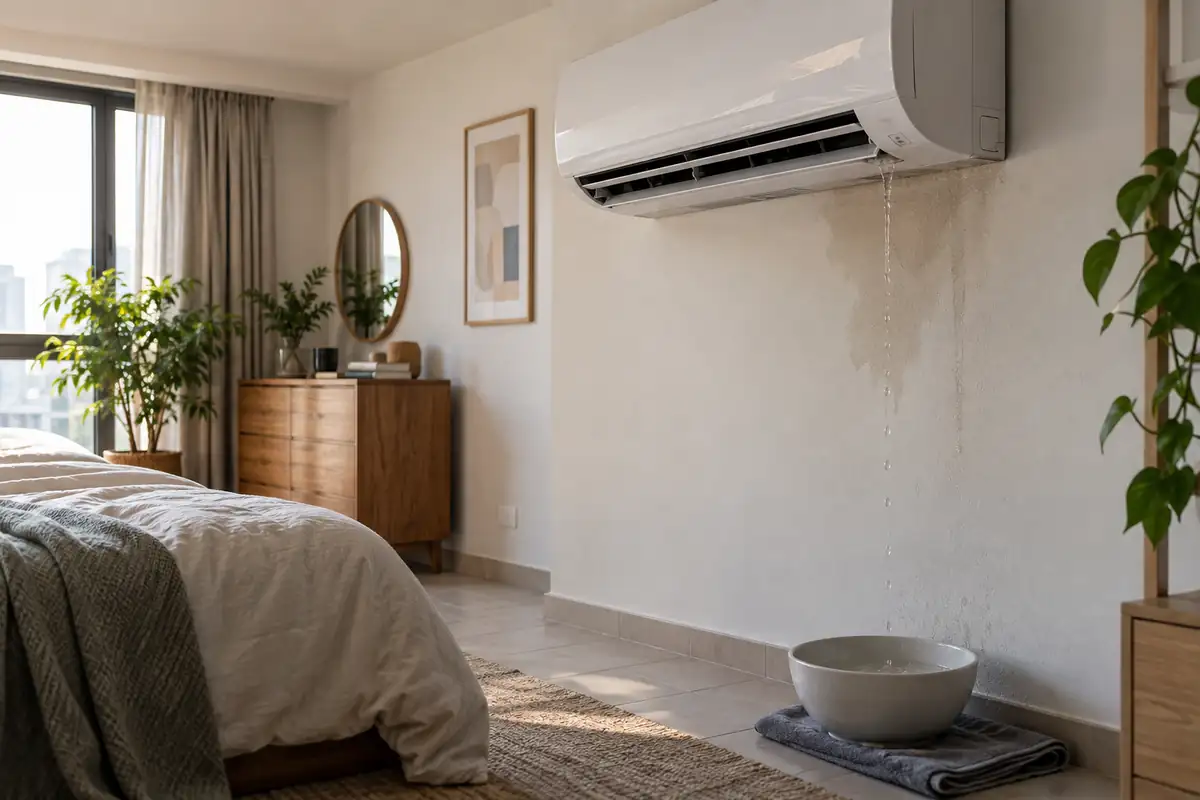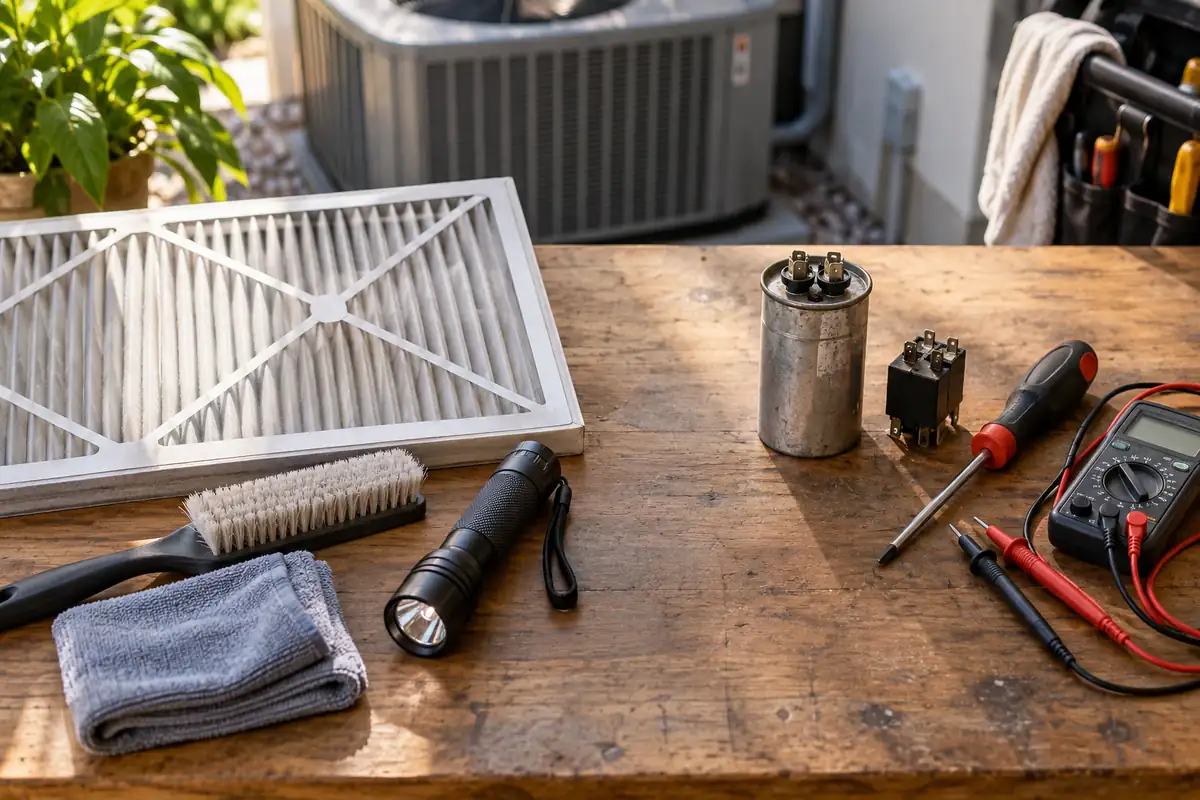


Some basic checks are safe to perform yourself. Other problems require professional inspection.
The important step is to understand the symptoms before deciding what needs repair.
Quick Answer: Why Is My AC Running but Not Cooling?
An AC can run but not cool properly for several reasons.
Common possibilities include:
- The thermostat is set incorrectly
- The air filter is dirty or blocked
- Airflow is restricted
- AC coils are dirty
- The evaporator coil is frozen
- The refrigerant level is low because of a system issue or leak
- Air ducts are blocked or leaking
- The outdoor unit has restricted airflow
- A fan, compressor, or another internal part is faulty
- The AC is not cooling the room effectively
The same symptom can have more than one cause. If simple checks do not restore cooling, the system may need closer inspection.
What Should You Check First if the AC Is Running but Not Cooling?
Start with simple observations that do not require opening the AC.
Check:
- Is the thermostat set to cooling mode?
- Is the set temperature below the current room temperature?
- Is air coming from the vents?
- Are the vents open and unobstructed by furniture or other objects?
- Does the visible air filter appear heavily clogged with dust?
- Is one room warm or is the whole property affected?
- Is the AC blowing warm air?
- Can you see water or ice around the unit?
- Are there unusual sounds or smells?
These details can help narrow down the problem. Do not open electrical panels or internal AC components to investigate further.
Why Is My AC Blowing Air but Not Cold Air?
If air comes from the vents but does not feel cold, the fan may still be moving air while another part of the cooling process is not working properly.
Possible causes include:
- Incorrect thermostat settings
- Restricted airflow
- Dirty coils
- Low refrigerant
- A frozen coil
- Outdoor unit problems
- Internal mechanical or electrical faults
Warm airflow does not confirm one specific fault. Further inspection may be needed if the problem continues.
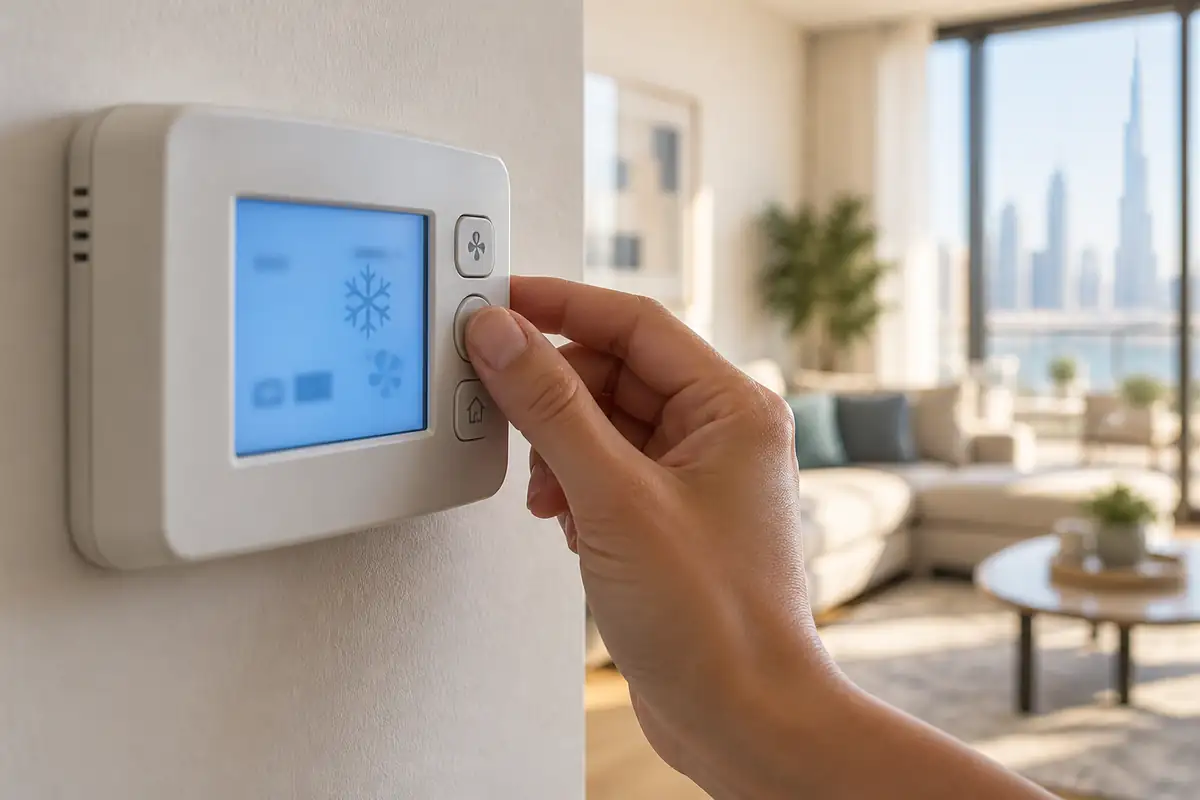
1. The Thermostat Setting May Be Wrong
Start with the thermostat because it is one of the simplest things to check.
Make sure:
- Cooling mode is selected
- The thermostat is set to a temperature below the current room temperature
- The system is not running in fan-only mode
If the settings appear correct but the room still does not cool, another part of the AC may be involved.
2. A Dirty or Blocked Air Filter Can Reduce Airflow
A severely clogged filter can restrict airflow through the AC.
You may notice:
- Weak airflow
- Longer cooling times
- Uneven comfort
- More visible dust around accessible parts of the AC
If the filter is visibly dirty, follow your AC manufacturer’s or building’s guidance for safely caring for the filter.
A dirty filter is only one possible cause. Poor cooling that persists after the filter is addressed may need further inspection.
3. Dirty AC Coils Can Reduce Cooling Performance
AC systems use coils as part of the cooling process.
When dirt builds up on these coils, cooling performance may be affected.
Possible signs include:
- Weaker cooling
- The AC running longer
- Poor performance even when airflow seems present
Internal coil cleaning should be treated as an AC maintenance task rather than a general DIY job.
The system should not be dismantled without the necessary knowledge and access.
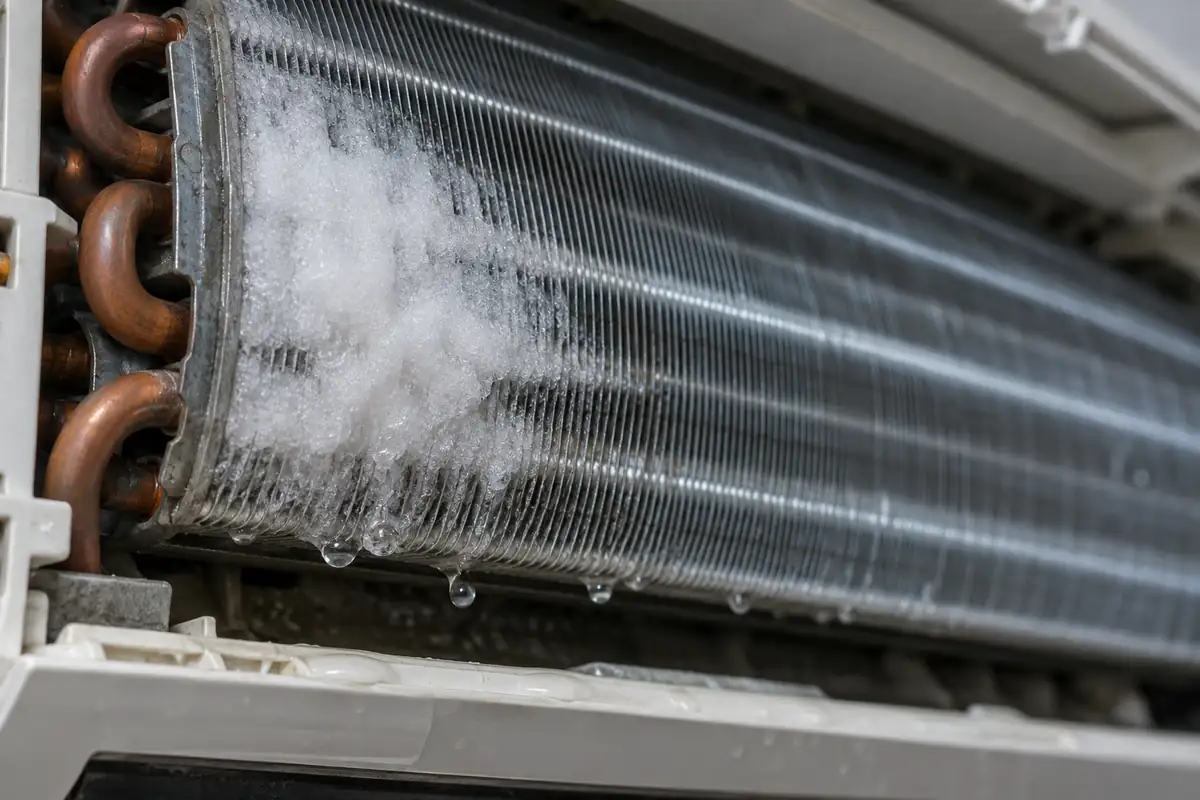
4. A Frozen Evaporator Coil Can Affect Cooling
Ice around an evaporator coil can interfere with normal airflow and cooling.
Possible signs may include:
- Weak airflow
- Cooling performance is dropping
- Visible ice, if it can be safely observed
- Water appearing after the ice begins to melt
A frozen coil can have different underlying causes.
Repeated freezing should be investigated rather than dismissed as something that will resolve when the ice disappears.
5. Low Refrigerant or a Refrigerant Leak Can Reduce Cooling
Refrigerant is part of the AC cooling process.
If the correct refrigerant level is not maintained because of a system issue or leak, cooling performance may fall.
You may notice weak cooling or another change in system performance, but symptoms alone cannot confirm that the AC simply “needs gas.”
Adding refrigerant without identifying why the level changed may leave the actual problem unresolved.
Refrigerant handling and leak diagnosis should be performed by a qualified technician.
6. Blocked or Leaking Ducts May Cause Uneven Cooling
This issue applies to ducted AC systems.
A duct problem may affect how cooled air reaches different rooms.
Possible signs include:
- Weak airflow in certain areas
- One room staying warmer than another
- Uneven cooling throughout the property
Duct problems can involve airflow restriction, leakage, or another issue within the system.
AC duct cleaning is not automatically the solution to every cooling problem. The condition of the ducts and the cause of poor airflow should be confirmed first.
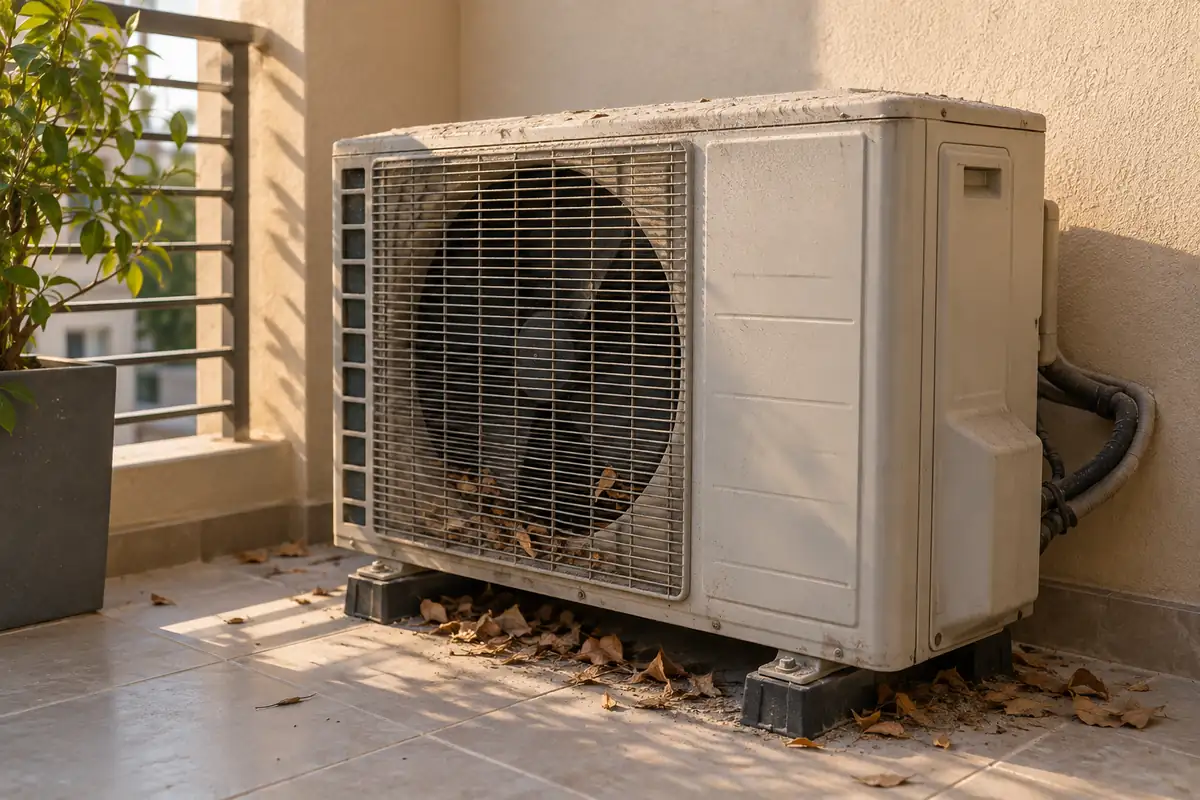
7. The Outdoor Unit May Have Restricted Airflow
Where an AC system uses an outdoor unit, airflow around it is important.
Visible debris or another obstruction around the unit may affect normal operation.
You can check whether there is an obvious obstruction without opening the unit.
Do not remove panels or reach inside the unit near electrical or moving components.
If the unit appears unobstructed but cooling remains poor, another cause may be involved.
8. A Fan, Compressor, or Other Internal Fault May Be Involved
Some cooling problems come from internal mechanical or electrical parts.
Possible signs may include:
- Cooling stops suddenly
- Unusual mechanical sounds
- AC turning on and off unexpectedly
- The system runs without providing enough cooling
- The problem persists after simple checks
A homeowner usually cannot confirm whether the compressor, fan, controls, or electrical system is at fault from symptoms alone.
These problems need proper diagnosis.
9. The AC May Be Struggling With the Room or Cooling Load
Sometimes an AC has always struggled to cool a room instead of suddenly losing performance.
Possible factors may include:
- Room size
- Heat entering through windows or doors
- System capacity
- Air distribution
- Changes made to the room
- Another design or performance issue
If the AC has never cooled the space well, the problem may not be due to a sudden AC fault. The system and room conditions may both need to be assessed.
Why Did My AC Suddenly Stop Cooling?
A sudden loss of cooling may warrant more attention than a slow change in performance.
Check whether the change occurred alongside any of these symptoms:
- Warm air from the vents
- Water leakage
- Ice
- A tripped breaker
- Unusual noise
- A burning or unusual smell
- The outdoor or indoor unit behaves differently
A sudden change can have several causes. If basic settings and visible airflow checks do not explain the problem, further inspection may be needed.
What Are the Signs Your AC May Need Cleaning?
Cleaning may be necessary if you notice:
- Reduced airflow
- Visible dust around accessible filters or vents
- Reduced cooling performance
- Dirt on accessible AC components
- An unusual smell that appears while the system is running
Different parts of the AC require different types of cleaning.
A dirty filter, dirty coil, and dirty duct are not the same problem, so the required work should match the actual condition of the system.
What Can You Safely Check Yourself?
You can usually make simple observations without opening the AC.
Safe checks include:
- Thermostat mode and temperature
- Whether air is coming from the vents
- Whether vents are blocked
- Visible filter condition
- Whether one or several rooms are affected
- Visible water or ice
- Unusual sounds or smells
- Visible obstruction around an outdoor unit
Avoid trying to inspect or repair:
- Refrigerant lines
- Internal wiring
- Compressors
- Electrical panels
- Internal coils
- Capacitors or other electrical components
If your AC has a normal user-accessible restart procedure, follow the manufacturer or building guidance. Do not open electrical panels to perform an internal reset.
When Does an AC Cooling Problem Require Professional Inspection?
Further inspection may be useful when:
- The AC still does not cool after basic checks
- Warm air keeps coming from the vents
- Cooling weakens again after earlier repairs
- Water keeps leaking
- Ice keeps forming
- A breaker trips
- There is an unusual electrical smell
- The AC makes new or unusual mechanical sounds
- Refrigerant loss may be involved
- The cause is not clear
If you see smoke, sparks, or feel unusual heat, stay away from the equipment. Then, take appropriate safety measures.
Can AC Maintenance Help Prevent Cooling Problems?
Planned AC maintenance can help identify some problems before they become more disruptive.
For example, it may reveal:
- Dirt affecting airflow or cooling
- Changes in system performance
- Visible leaks
- Wear or other emerging issues
Maintenance cannot prevent every AC fault. Unexpected failures can still happen, and an existing fault may need repair rather than routine maintenance.
Frequently Asked Questions
Why is my AC running but not cooling?
Possible causes include incorrect thermostat settings, restricted airflow, dirty filters or coils, low refrigerant, frozen coils, duct problems, outdoor-unit restrictions, and internal faults. Identifying the exact cause may require an inspection.
Why is my AC blowing air but not cooling?
The fan may still move air even when the cooling part of the system is not working properly. Controls, airflow, coils, refrigerant, the outdoor unit, or internal components may be involved.
What should I check first if my AC is not cooling?
Check the thermostat mode and temperature. Look at the airflow from the vents. Inspect the filter for dirt. Make sure vents aren't blocked. Also, look for water, ice, or any warning signs. Don't open internal compartments or access electrical components.
Can a dirty air filter stop an AC from cooling properly?
A severely clogged filter can reduce airflow and affect cooling performance. However, poor cooling may have other causes, so the filter should not automatically be assumed to be the only problem.
How can I tell if low refrigerant may be affecting my AC?
Weak cooling may occur when refrigerant is low, but cooling symptoms alone cannot confirm refrigerant loss. A system should be checked for the actual cause rather than assuming it only needs a refrigerant top-up.
What are signs that an AC may need cleaning?
Signs include reduced airflow, dirt around filters or vents, weaker cooling, and strange smells. The type of cleaning required depends on the affected part of the system.
Why did my AC suddenly stop cooling?
A sudden cooling issue may involve controls, airflow, refrigerant, electrical parts, the outdoor unit, or another internal fault. Watch for leaks, breaker trips, unusual sounds, smells, or other changes that happened at the same time.
Can a compressor problem cause an AC to stop cooling?
Yes, an internal compressor problem can affect cooling. However, poor cooling alone does not prove that the compressor has failed. Proper diagnosis is needed before deciding on repair.
When should I call an AC technician?
Call a technician if cooling is still poor after basic checks. You should also reach out if the problem keeps coming back. Look for water or ice buildup or electrical warning signs, and call a technician if you can't safely find the cause.
Need Help With an AC Cooling Problem?
If your AC runs but doesn't cool well, tell RapidixHome about your property type, area of Dubai, and the affected room. Describe the cooling issues and any signs or symptoms, such as water or ice buildup, unusual noise, or warning signs. This information helps us decide if you need AC maintenance, inspection, or repair.