

A tap may start dripping. A drain may become slower. Water pressure may change. You may notice a damp patch with no clear source.
Understanding these signs helps you know which part of the plumbing needs attention. It also tells you if the problem can wait or needs quick action.
Quick Answer: What Are the Most Common Plumbing Problems in Dubai Homes?
Common plumbing problems include
- Leaking taps and fixtures
- Leaks under sinks or around pipes
- Hidden water leaks
- Slow or blocked drains
- Running toilets
- Low or changing water pressure
- Water heater problems
- Bad drain odors
- Burst pipes or heavy active leaks
The same symptom can have more than one cause. The exact problem may need inspection if it is not visible.
1. Leaking Taps, Showers, and Fixtures
A dripping fixture is one of the easiest plumbing problems to notice.
Look for:
- A tap that keeps dripping
- Water around a shower fitting
- Moisture around handles or connections
- A leak that returns after previous work
A small visible leak may stay minor for a while, but repeated water around the same fitting deserves attention.
A fixture leak is also different from a hidden pipe leak inside a wall, ceiling, or cabinet.
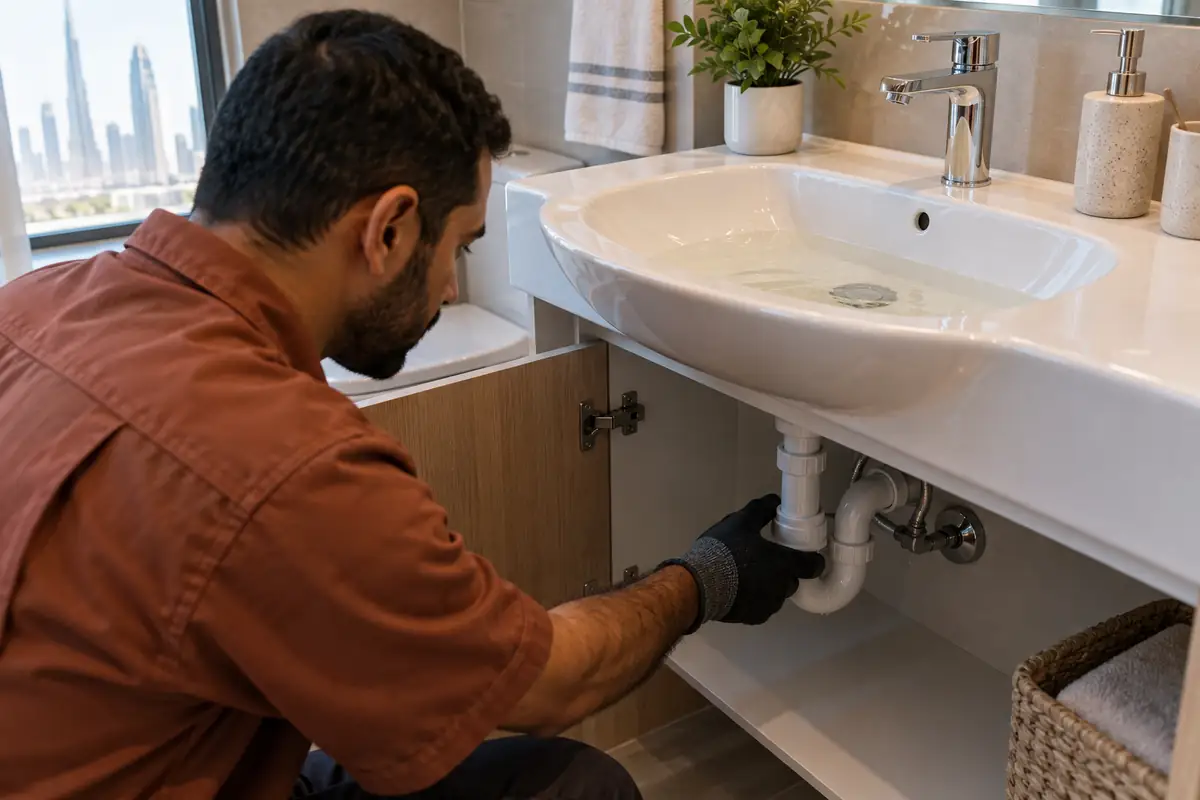
2. Water Leaking Under Sinks or Around Pipes
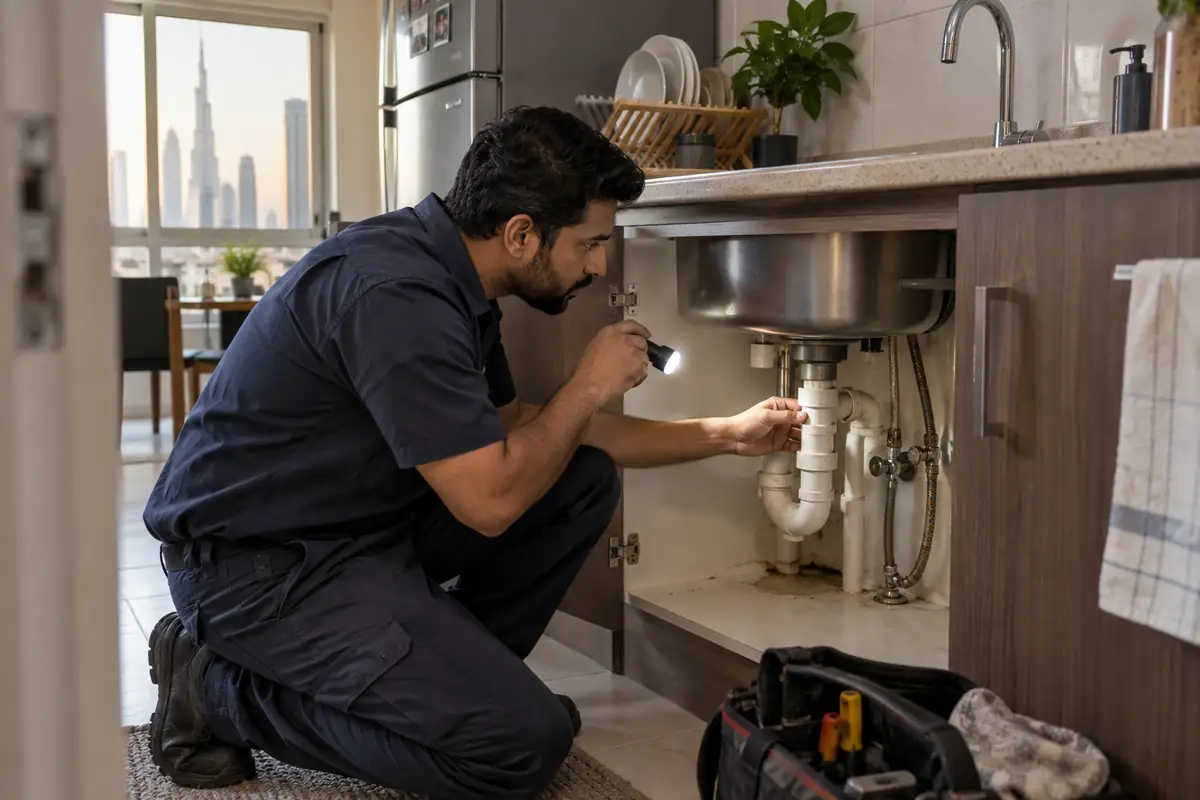
Leaks below sinks can remain hidden until water starts to collect inside the cabinet.
Signs may include:
- Small puddles
- Damp cabinet surfaces
- Moisture around pipe connections
- Water marks
- A damp or musty odor
- The same wet area returning after it dries
The point where you see water is not always where the leak starts. Water can move along a pipe or surface before becoming visible.
3. Hidden Water Leaks
Some plumbing leaks are difficult to see directly.
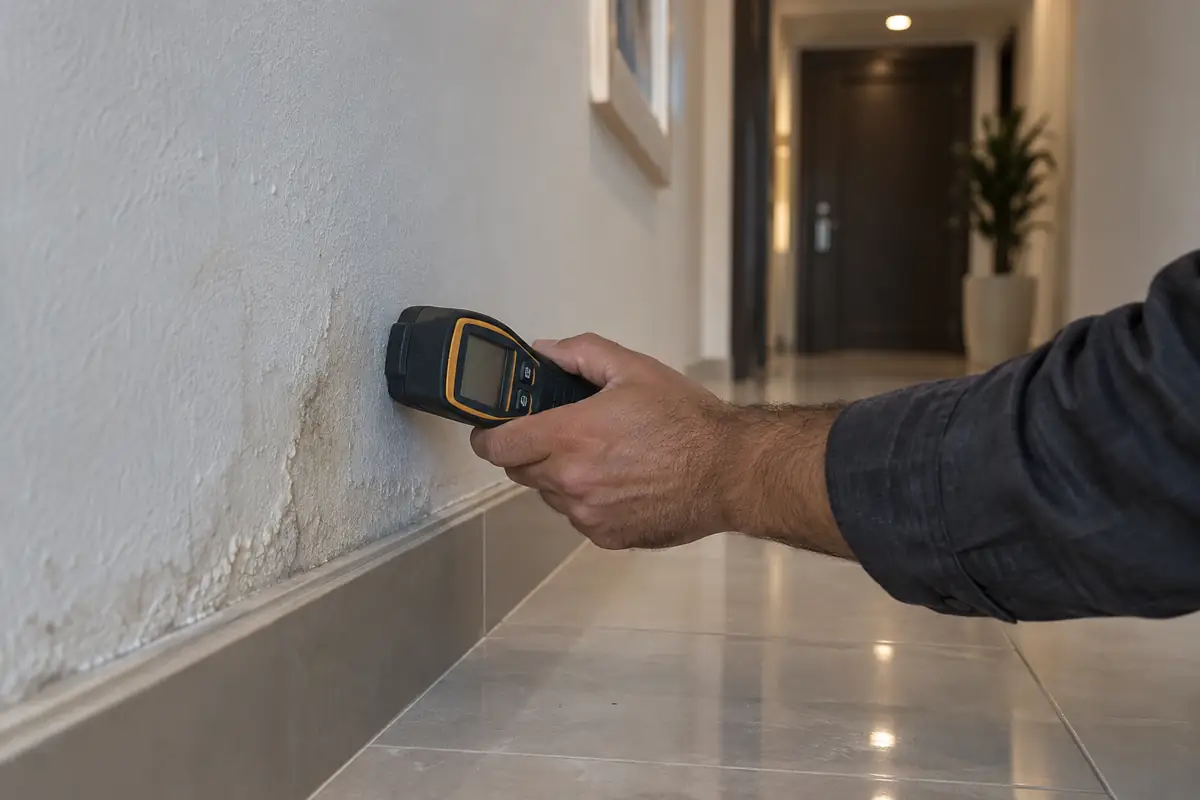
Warning signs may include:
- Damp wall patches
- Ceiling stains
- Bubbling or peeling paint
- Moisture with no visible plumbing source
- Watermarks that keep returning
- Dampness inside cabinets
- An unusual increase in water use without a clear reason
The visible damage may not show the exact location of the leak.
If moisture keeps returning and the source cannot be found safely, further leak inspection may be needed.
4. Slow or Blocked Drains
A drain often becomes slower before it becomes fully blocked.
Watch for:
- Slow-draining sinks
- Slow shower drainage
- Standing water
- A blockage that keeps returning
- More than one slow drain
- Unusual odors from a drain
One slow fixture may involve a local blockage. If several drains are affected or the same blockage returns, the problem may be deeper in the drainage system.
Avoid opening pipework or using aggressive chemicals simply to diagnose the problem.
5. Running or Constantly Refilling Toilets
A toilet that keeps running after use may have a problem with the flushing or filling system.
Common signs include:
- Water continues to move in the bowl
- The cistern is repeatedly refilling
- Filling sounds long after flushing
- Weak or inconsistent flushing
The exact cause can vary. If the problem continues, the affected toilet components may need inspection.
6. Low or Changing Water Pressure
A change in water pressure can affect one fixture or several parts of the home.
You may notice:
- Weak flow from a tap
- Low shower pressure
- Pressure changes during use
- One fixture is behaving differently from the others
- Several fixtures are losing pressure at the same time
If only one fixture is affected, the issue may be local. If several fixtures change at the same time, the wider plumbing or building water system may need to be checked.
Do not assume one cause from pressure symptoms alone.
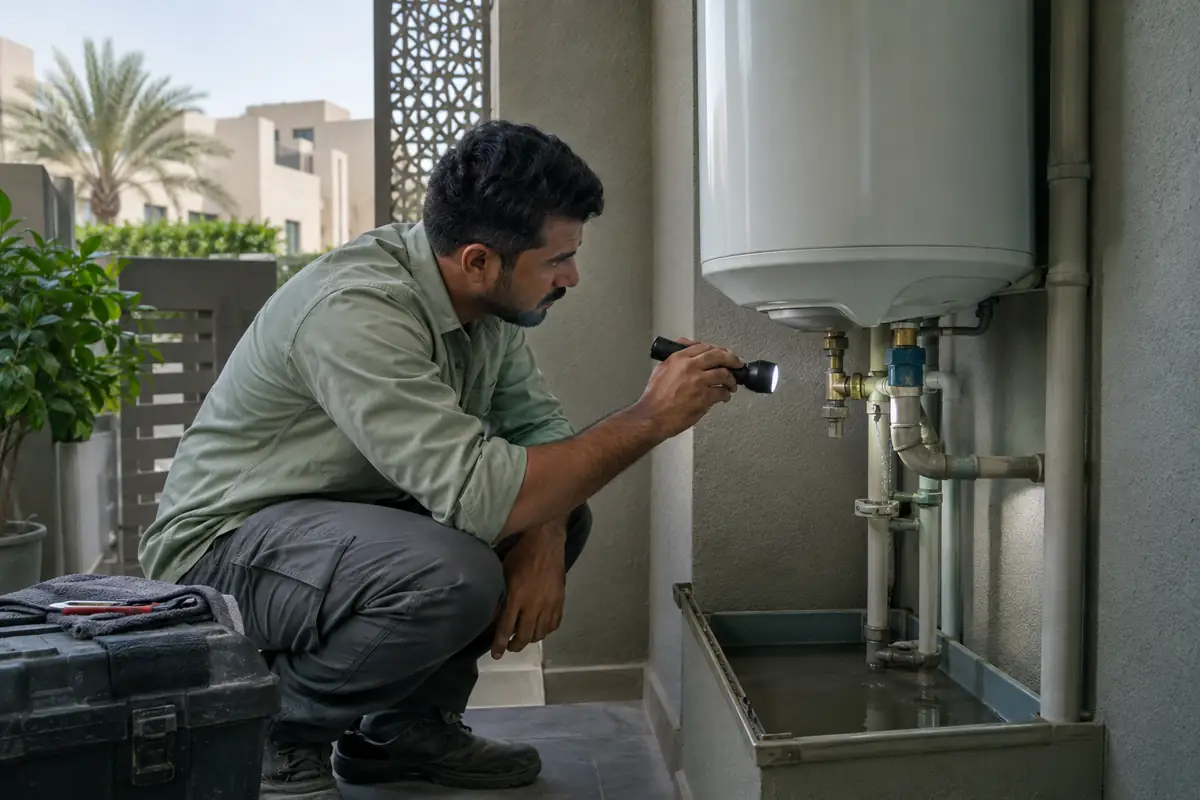
7. Water Heater Problems
Water heater problems can appear as changes in hot water performance.
Look for:
- No hot water
- Water that does not heat properly
- Temperature changes during use
- Unusual sounds
- Visible water leakage
- Moisture around the heater or connected pipes
Do not open electrical or internal heater parts unless you are qualified to work on them. Water around electrical equipment should be treated with extra care.
8. Bad Drain Odors
A repeated bad smell from a sink, shower, floor drain, or other plumbing areas can point to a drainage problem.
Possible sources may involve
- Drain buildup
- Traps
- Blockages
- Wastewater plumbing
Smell alone does not confirm the cause.
If the odor keeps returning, note which drain or area is affected and whether drainage has also become slower.
9. Burst Pipes or Heavy Active Leaks
A burst pipe or strong active leak is different from a slow drip.
Warning signs include:
- Heavy, uncontrolled water flow
- Water spreads quickly
- Floors or walls becoming wet
- Rapid ceiling or wall damage
- Water reaching electrical fittings
These problems need faster attention because damage can spread quickly.
If water is reaching electrical equipment or another clear safety hazard is present, keep away from the affected area and take appropriate safety actions.
What Should You Check First When You Notice a Plumbing Problem?
You can gather useful information without opening pipes or equipment.
Check:
- Where the water, smell, or pressure problem first appears
- Which fixture or room is affected
- Whether the problem is constant or occasional
- Whether one or several drains are slow
- Whether water pressure changed in one place or throughout the home
- Whether hot water is affected
- Whether moisture or damage is spreading
- When the problem first started
- Whether the same issue has happened before
Photos or videos can also help explain what is happening.
Avoid dismantling pipes, opening water heaters, cutting walls, or performing technical leak testing just to identify the problem.
Are Plumbing Problems Different in Apartments and Villas?
The basic plumbing problems can be similar, but the systems around them may differ.
Apartments and Penthouses
A problem may involve
- Plumbing inside the unit
- Shared building systems
- Water-pressure changes
- A leak affecting another unit
- Plumbing outside the residents' direct area
If the apparent source is outside the property, building management may need to help identify the responsible system.
Villas and Townhouses
These properties may have:
- More bathrooms or plumbing fixtures
- Outdoor water connections
- Additional wet areas
- Water tanks where applicable
The correct next step depends on the actual property setup.
Which Plumbing Problems Need Faster Attention?
Some plumbing problems should be treated more quickly than routine, minor repairs.
Give faster attention to:
- Burst pipes
- Heavy active leaks
- Water near electrical fittings
- Rapidly spreading water damage
- Repeated major leakage
- A water heater leak with another safety concern
- Any plumbing issue that creates an immediate hazard
A dripping tap and an uncontrolled water leak do not have the same urgency.
When Should You Call a Plumber?
Professional plumbing help may be useful when:
- A leak keeps returning
- The source cannot be found
- Several fixtures are affected
- A drain repeatedly blocks
- Water pressure changes unexpectedly
- A water heater problem continues
- Moisture is spreading through a wall or ceiling
- Hidden plumbing may be involved
- The work requires tools or access beyond safe observation
If you contact a plumber, describe the symptoms instead of trying to diagnose the exact component yourself.
Useful details include:
- Property type
- Dubai area
- Affected room
- Affected fixture
- Where water appears
- When the problem started
- Whether it has happened before
- Photos or videos where they're useful
How Can You Reduce Repeat Plumbing Problems?
You do not need a complicated plumbing routine.
A few simple habits can help:
- Do not ignore leaks that keep returning
- Pay attention when drains repeatedly become slow
- Note sudden changes in water pressure
- Keep a basic history of previous plumbing repairs
- Find the source of moisture before repairing damaged paint or finishes
These steps cannot prevent every plumbing fault, but they can make recurring issues easier to identify.
Frequently Asked Questions
What are the most common plumbing problems in Dubai homes?
Common issues are leaking fixtures, hidden water leaks, blocked drains, running toilets, changes in water pressure, water heater faults, and active pipe leaks.
What are signs of a hidden water leak?
Signs may include damp walls, ceiling stains, peeling or bubbling paint, moisture in cabinets, or recurring watermarks without a visible source.
Why does my drain keep blocking?
A repeated blockage may involve buildup, restriction, or another problem further inside the drainage system. If the same drain keeps blocking, further inspection may be needed.
Why is my water pressure low or inconsistent?
Pressure changes may involve a single fixture, part of the plumbing system, or a wider building water issue. Checking whether one or several fixtures are affected can help narrow down the problem.
Why does my toilet keep running?
A running toilet may have a fault in the flushing or filling system. The affected component should be identified before deciding what needs to be repaired.
What are common signs of a water heater problem?
Common signs include no hot water, fluctuating water temperatures, unusual sounds, visible leaks, and moisture around the heater.
Is a bad drain smell always caused by a plumbing problem?
Not necessarily. Drain odors can have several causes. If the smell keeps returning, the affected drain and nearby plumbing may need inspection.
Which plumbing problems need faster attention?
Burst pipes, active leaks, water near electrical fittings, and spreading water damage need quick action. These issues are more urgent than minor plumbing problems.
When should I call a plumber?
Call a plumber when the problem keeps coming back, you can’t find the source, multiple fixtures are affected, the issue involves hidden plumbing, water damage is spreading, or there is a persistent fault.
Need Help With a Plumbing Problem?
If your Dubai home has a leak, blocked drain, low water pressure, or water heater issue, let RapidixHome know. Share the property type, affected area, fixture, and any visible symptoms.
This information helps us find the right plumbing service for you.