


These signs can suggest that the tank needs attention; however, they do not always prove that cleaning is the only solution.
The source may also involve the tank condition, incoming water, pipes, or another part of the water system.
Quick Answer: What Are the Signs Your Water Tank May Need Cleaning?
Possible signs include:
- Visible sediment
- Debris or dirt inside the tank
- Cloudy or discolored stored water
- A recurring, unusual odor
- Visible buildup on tank surfaces
- An unknown cleaning history
- A loose or damaged tank cover
- The same tank-related problem is returning after previous cleanings
The strongest signs are those linked directly to the tank, such as visible sediment, debris, or buildup.
Changes in water color, smell, or pressure need more care because they can have several possible causes.
1. Visible Sediment Inside the Tank
Visible sediment is one of the clearest signs that the tank may need cleaning.
You may notice:
- Settled material at the bottom
- Loose particles
- Deposits
- Material collecting on the tank floor
Sediment can build up over time.
If physical material is clearly visible inside the tank, cleaning may be relevant because the problem is directly linked to tank cleanliness.
2. Debris or Dirt Inside the Tank
Loose debris is another direct cleanliness sign.
This may include:
- Dirt
- Small particles
- Loose material
- Debris entering through an opening
- Deposits on accessible internal surfaces
If debris keeps appearing after previous cleanings, the source may also need attention. For example, a damaged cover or another opening may be allowing material to enter.
Cleaning can remove the debris, but it may not fix the reason it keeps returning.
3. Cloudy or Discolored Stored Water
A change in water appearance may be a reason to check the tank and wider water system.
You may notice water that appears:
- Cloudy
- Discolored
- Different from its normal appearance
- Containing visible particles
Tank buildup may be one possible source.
However, water's appearance can also be affected by:
- Incoming water
- Pipes
- Plumbing condition
- Tank damage
- Other parts of the water system
Cloudy or discolored water does not prove that the tank is dirty. The source should be identified before cleaning is treated as the only solution.
4. A Recurring Unusual Odor
An unusual odor that keeps returning can be another sign that the stored water system needs attention.
The smell may appear:
- When certain taps are opened
- In water supplied from the tank
- Around the tank area
- At several fixtures
A tank-related buildup may be involved, but odor alone cannot identify the cause.
The source may also involve:
- Incoming water
- Pipes
- Plumbing
- Drainage near a fixture
- Another water-system issue
Do not assume that an odor automatically proves bacteria, contamination, or a dirty tank.
5. Visible Buildup on Tank Surfaces
Visible buildup on accessible tank surfaces is another strong sign.
You may see:
- Deposits
- Film
- Dirt
- Material attached to the tank surface
- Other unusual visible buildup
If the material looks green, dark, or slimy, describe what is visible rather than trying to identify it yourself.
Appearance alone cannot confirm whether the material is algae, bacteria, or another substance. The important point is that visible buildup means the tank's condition should be checked.
6. You Do Not Know When the Tank Was Last Cleaned
An unknown cleaning history does not automatically mean the tank is dirty. However, it does mean you have less information about its current maintenance condition.
A condition check may be useful when:
- The previous cleaning date is unknown
- There are no maintenance records
- You have recently moved into the property.
- Other warning signs are also present
- The tank condition has not been reviewed for some time
The correct sequence is:
unknown history → check current condition → decide whether cleaning is needed
Not:
unknown history → automatic cleaning
7. The Tank Cover Is Loose or Damaged
The tank cover helps protect the stored water system from outside materials.
A cover may need attention if you notice:
- It is loose
- It does not sit correctly
- It is visibly damaged
- There are open gaps
- Debris may be entering around it
A damaged cover is not only a cleaning issue; the tank may need inspection or repair as well. Cleaning can remove material already inside the tank, but it does not fix a damaged cover.
8. The Same Tank Problem Keeps Returning
A repeated problem deserves more attention than a one-time issue.
Examples include:
- Sediment returning after cleaning
- Debris appears again
- Odor returning
- Water's appearance is changing again
- The tank repeatedly becomes visibly dirty
If the same concern keeps returning, cleaning again may not solve the root problem. The wider tank and water system may need to be checked.
Does Bad-Smelling Water Mean the Tank Is Dirty?
Not necessarily. A recurring odor may be a reason to inspect the tank, but the smell may also come from:
- Pipes
- Incoming water
- A fixture
- Drainage
- Another part of the plumbing system
The location and pattern of the smell can provide useful clues.
For example, an odor affecting one fixture may point to a different problem than an odor affecting water throughout the property.
Smell alone should not be used to diagnose tank conditions.
Does Cloudy or Discolored Water Mean the Tank Needs Cleaning?
Not always. Tank sediment or debris can affect the stored water appearance in some cases. But discoloration can also come from another part of the water system.
Check whether:
- The change affects one fixture or several
- Visible particles are present
- The tank itself shows sediment or debris
- The problem started suddenly
- The issue keeps returning
If the source is unclear, inspection may be more useful than assuming that cleaning is the answer.
Is Low Water Pressure a Sign the Tank Needs Cleaning?
Low water pressure by itself does not prove that a water tank needs cleaning.
Pressure can be affected by:
- Fixtures
- Pipes
- Pumps
- Plumbing restrictions
- Building water systems
- Other water supply problems
If low pressure appears together with clear tank cleanliness signs, the tank can be checked as part of the wider system.
But pressure alone is too broad to diagnose a dirty tank.
What Signs Point to a Tank Problem Rather Than Just a Cleaning Problem?
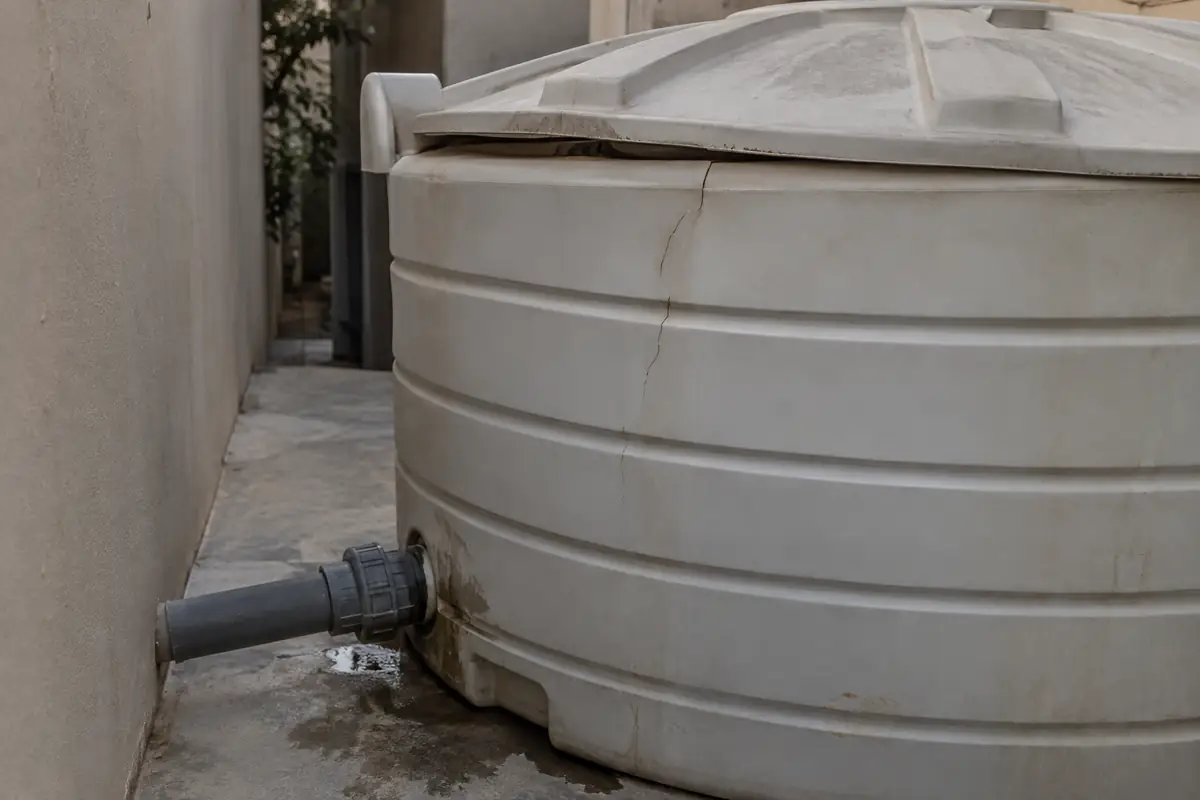
Some signs suggest that the tank itself may need inspection or repair.
These include:
- Cracks
- Visible leakage
- Damaged tank surfaces
- A loose or broken cover
- Corrosion where applicable
- External dampness
- Physical damage
- Problems that keep returning after cleaning
In these cases, cleaning alone may not be enough. A water tank inspection may be more relevant because the main question is the physical condition of the tank.
Is Water Tank Cleaning the Same as Disinfection?
No. These are different service scopes.
Water Tank Cleaning
Cleaning focuses on removing physical materials such as:
- Sediment
- Dirt
- Debris
- Visible buildup
Water Tank Disinfection
Disinfection is a separate treatment process. A smell, color change, or visible buildup should not be used by itself to decide that disinfection is required.
The correct scope should depend on the actual condition and purpose of the service.
How Can You Check Whether Your Water Tank Needs Attention?
You can make basic observations without entering or dismantling the tank.
Check:
- Whether sediment is visible
- Whether debris is present
- Whether the water's appearance has changed
- Whether an unusual odor keeps returning
- Whether the cover is loose or damaged
- Whether there is visible external damage
- Whether there are signs of leakage
- Whether the previous cleaning date is known
- Whether the same concern has occurred before
These observations can help explain the problem.
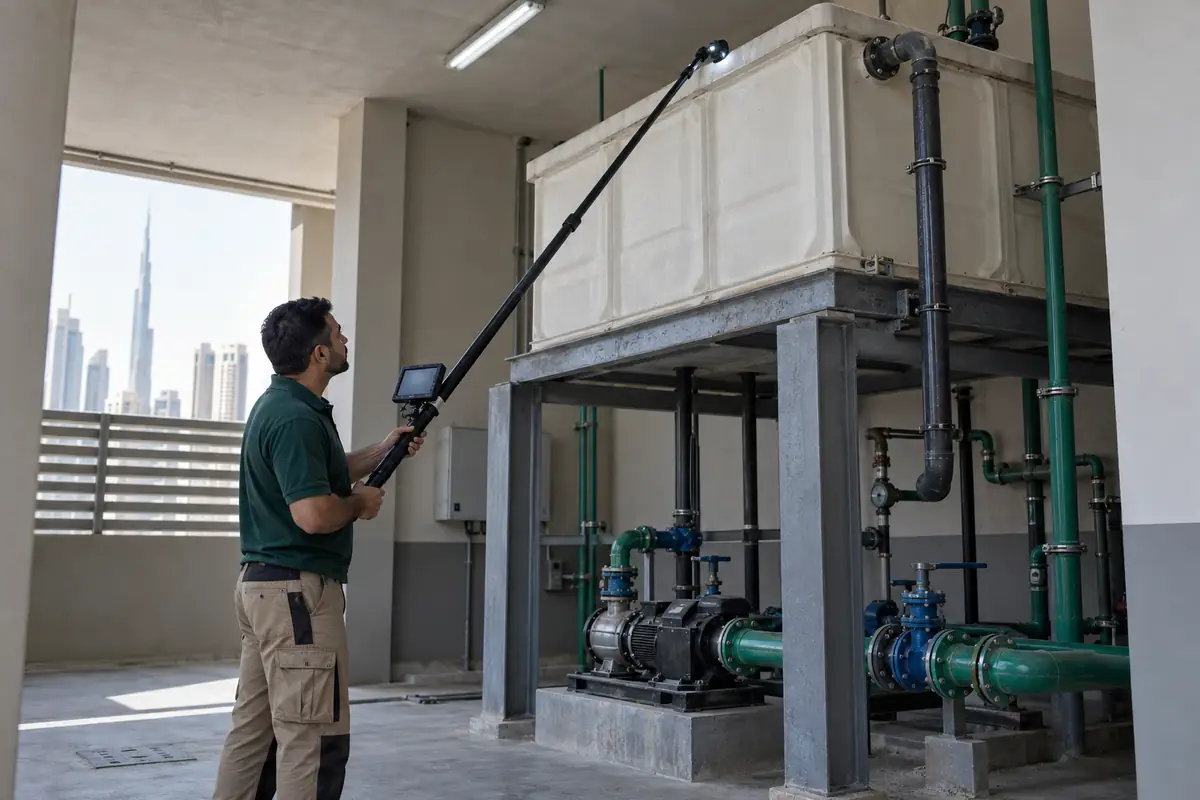
They do not replace a technical inspection when the tank is difficult to access or the source is unclear.
How Often Should a Water Tank Be Cleaned?
There is no single cleaning interval in this article that should be applied to every tank.
Timing can depend on:
- Tank condition
- Visible buildup
- Previous cleaning history
- Property or building guidance
- Tank use
- Relevant local requirements where applicable
A tank with clear sediment or debris may need attention before its normally planned cleaning date.
If a specific current building or local requirement applies, follow that guidance rather than relying on a generic online schedule.
When Is Cleaning the Right Next Step?
Cleaning may be more relevant when the main problem is physical buildup inside the tank.
Examples include:
- Visible sediment
- Visible debris
- Dirt on tank surfaces
- Deposits or other buildup
- A tank condition showing that material needs to be removed
This is where the cleaning predicate is strongest.
When Might Water Tank Inspection Be More Relevant?
Inspection may be a better next step when:
- The tank is leaking
- A crack is visible
- The cover is damaged
- Physical damage is suspected
- The cause of the problem is unclear
- The same problem keeps returning after cleaning
- You cannot safely assess the condition
Inspection focuses on understanding tank condition rather than simply removing buildup.
Can You Check or Clean a Water Tank Yourself?
Basic external checks are different from full tank cleaning.
You may be able to safely observe:
- Cover condition
- External damage
- Visible debris
- Water appearance
- Maintenance records
Full cleaning may involve
- Safe access
- Water removal
- Pumps or equipment
- Restricted spaces
- Internal surfaces
- Cleaning or treatment procedures
Do not enter a tank, use chemicals, perform disinfection, or work around pumps and electrical equipment without the correct processes and skills.
When Should You Get Professional Water Tank Help?
Professional help may be useful when:
- Visible sediment or debris is present
- Water's appearance keeps changing
- An unusual odor keeps returning
- The tank cover is damaged
- Leakage or physical damage is visible
- The tank condition cannot be checked safely
- The same problem returns after cleaning
- You are unsure whether cleaning, inspection, or disinfection is the correct service
The goal is to identify the right problem before choosing the service.
Frequently Asked Questions
What are the main signs a water tank needs cleaning?
Common signs include visible sediment, debris, dirt, and buildup on tank surfaces, unusual water appearance, recurring odor, or an unclear cleaning history. The strongest cleaning signals are visible sediment, debris, and buildup inside the tank.
Is visible sediment a sign the tank should be cleaned?
Visible sediment is a direct sign that material has collected inside the tank. Cleaning may be necessary when this buildup needs to be removed.
Does cloudy or discolored water mean the tank is dirty?
Not necessarily. Discoloration may come from the tank, incoming water, pipes, plumbing, or another part of the system.
Why does my water tank smell bad?
A recurring odor may mean the tank or wider water system needs attention. Smell alone cannot identify the exact cause.
Does low water pressure mean the tank needs cleaning?
No. Low pressure can have many causes and does not prove that the tank is dirty.
Does an unknown cleaning history mean the tank needs cleaning?
Not automatically. It may be a reason to check the current condition of the tank before deciding whether cleaning is needed.
How can I check whether my water tank needs attention?
Look for visible sediment, debris, water appearance changes, recurring odor, cover damage, leaks, and other visible tank condition problems. Do not enter the tank simply to inspect it.
How often should a water tank be cleaned?
There is no one interval that fits every tank. Timing can depend on condition, buildup, previous cleaning history, property guidance, and relevant requirements.
Is water tank cleaning the same as disinfection?
No. Cleaning removes physical sediment, dirt, debris, and buildup. Disinfection is a separate treatment process.
When do I need a water tank inspection instead of cleaning?
Inspection may be more relevant when the tank is leaking, cracked, damaged, has a poor cover, or when the cause of a repeated problem is unclear.
Can I clean my water tank myself?
Full tank cleaning can involve safe access, equipment, water removal, and restricted spaces. Basic observation may be possible, but technical cleaning should not be treated as simple DIY work.
Need Help With a Water Tank Concern?
If you spot sediment, debris, strange water, or a bad smell, contact RapidixHome. Also, let us know if the tank cover is damaged or if there is another issue. Include your property type, the Dubai area, and the tank type if possible.
This info helps us determine if you need cleaning, inspection, disinfection, or other services.