


Cleaning these areas in a clear order makes the job easier. It also helps you see whether the pool is simply dirty or whether another problem may need attention.
Pool cleaning focuses mainly on physical dirt and debris. It is not the same as full pool maintenance, water treatment, or equipment repair.
Quick Answer: What Is the Correct Order to Clean a Pool?
A simple pool cleaning order is:
- Inspect the pool
- Remove floating debris
- Brush the walls, steps, and corners
- Remove dirt and sand from the floor
- Vacuum where appropriate
- Empty accessible skimmer baskets
- Recheck the pool after cleaning
If water remains cloudy, circulation seems weak, or the same dirt quickly returns, normal cleaning may not be enough.
Step 1: Inspect the Pool Before Cleaning
Start by looking at the whole pool.
Check for:
- Leaves on the water
- Sand on the floor
- Dirt on walls or steps
- Debris in corners
- Visible buildup
- Full skimmer baskets
- Cloudy-looking water
- Visible leaks
- Unusual equipment sounds
This first check helps you decide what needs physical cleaning and whether there are signs of a wider problem.
Step 2: Remove Leaves and Floating Debris
Start with material floating on the surface.
This may include:
- Leaves
- Insects
- Dust
- Small pieces of debris
- Other wind-blown material
Removing floating debris first helps stop some of it from sinking while you clean the rest of the pool. If large amounts of debris return quickly, note where they may be coming from.
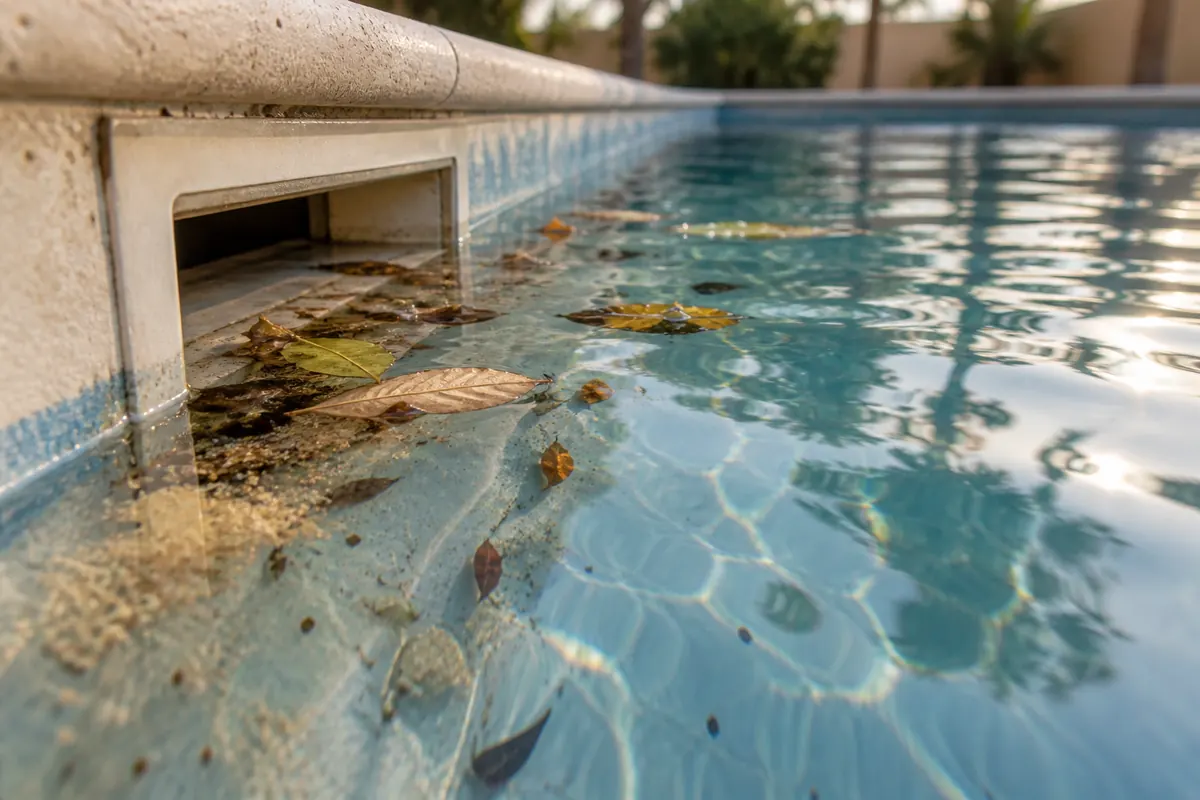
Step 3: Brush the Walls, Steps, and Corners
Pool surfaces can collect dirt even when the water looks fairly clear.
Pay attention to:
- Walls
- Steps
- Corners
- Edges
- Areas where visible buildup collects
Brushing helps to loosen physical dirt from these surfaces. If unusual buildup returns after normal cleaning, repeated brushing may not address the real cause.
Step 4: Remove Dirt and Sand From the Pool Floor
The pool floor can collect material that is easy to miss from above.
Look for:
- Sand
- Dust
- Leaves
- Settled dirt
- Other visible debris
This is especially useful after windy or dusty conditions. A pool surface can look clean while dirt is still sitting on the floor.
Step 5: Vacuum the Pool Where Appropriate
Vacuuming can help remove material that has settled on the bottom.
It may be useful for:
- Fine dirt
- Sand
- Settled debris
- Material that cannot be removed from the surface
Follow the normal operating guidance for the equipment being used. Routine pool cleaning should not involve opening or repairing pumps, filters, or electrical parts.
Step 6: Empty Accessible Skimmer Baskets
Skimmer baskets can collect floating material before it moves further through the pool system.
You may find:
- Leaves
- Insects
- Small debris
- Other surface material
If a basket fills unusually fast, the pool may have been exposed to more debris than normal. Cleaning the basket does not confirm that the entire filtration system is working correctly.
Step 7: Check the Pool Again After Cleaning
Once visible dirt and debris have been removed, inspect the pool again.
Ask:
- Is sand still visible on the floor?
- Is dirt still present on the walls?
- Does the water still look cloudy?
- Is build-up returning quickly?
- Do the baskets fill again soon?
- Does circulation appear weaker than normal?
This final check helps separate a normal cleaning need from a wider pool problem.
What Are Signs Your Pool Needs Cleaning?
Physical cleaning may be needed when you notice:
- Leaves floating on the surface
- Sand or dust on the floor
- Dirt on the walls
- Debris in corners
- Full skimmer baskets
- Visible deposits on pool surfaces
- Dirt after windy or dusty weather
- Physical debris returning after recent outdoor exposure
These are stronger cleaning signals because they relate directly to visible materials in the pool.
What Should You Check After Heavy Dust or a Sandstorm?
Outdoor pools can collect extra dust and sand after harsh weather.
Check:
- The water surface
- Pool floor
- Steps
- Walls
- Corners
- Skimmer baskets
- Water appearance
Dust may settle at the bottom even when the surface looks fairly clear. After removing the physical debris, check whether any cloudiness or other problems remain.
Is Cloudy Pool Water Always a Cleaning Problem?
No. Cloudy water can appear when dirt or suspended debris is present, but physical cleaning is not the only possible solution.
Cloudiness may also involve:
- Filtration
- Circulation
- Water treatment
- Equipment condition
- Another pool system issue
If visible debris has been removed and the water remains cloudy, further assessment may be more useful than repeated cleaning.
Why Does a Pool Get Dirty Again Quickly?
A pool can collect new debris from its surroundings.
Possible sources include:
- Wind-blown dust
- Sand
- Leaves
- Nearby landscaping
- Pool use
- Recent weather
However, dirt that keeps returning may also suggest that another part of the pool system needs attention.
The important question is whether the pool is simply being exposed to more debris or whether normal cleaning is failing to keep it clear.
Is Pool Cleaning the Same as Pool Maintenance?
No. Pool cleaning focuses mainly on physical dirt.
It may include:
- Surface debris
- Pool walls
- Steps
- Pool floor
- Skimmer baskets
- Visible buildup
Pool Maintenance
Pool maintenance is broader.
It can involve:
- Filtration
- Circulation
- Equipment condition
- Water treatment
- Recurring system problems
- Other technical checks
A pool can look clean and still need maintenance.
What Are Common Pool Cleaning Mistakes?
Common mistakes include:
- Cleaning only the water's surface
- Ignoring sand on the floor
- Forgetting walls and corners
- Leaving skimmer baskets full
- Assuming cloudy water always needs more cleaning
- Ignoring dirt that returns quickly
- Treating equipment problems as cleaning problems
- Adding chemicals without knowing what the water actually needs
A good cleaning routine should remove visible dirt and help you notice when the problem is something different.
How Often Should You Clean a Pool?
There is no single cleaning schedule that fits every pool.
Cleaning needs can change based on:
- Pool use
- Visible debris
- Outdoor exposure
- Nearby landscaping
- Weather
- Pool condition
- How quickly dirt returns
A pool with visible leaves, sand, or buildup may need attention even if it has been cleaned recently. The visible condition of the pool is more useful than relying only on a fixed calendar.
Can You Clean Your Pool Yourself?
Some basic physical cleaning tasks may be suitable for homeowners.
These may include:
- Removing surface debris
- Brushing accessible walls and steps
- Checking the pool floor
- Emptying accessible skimmer baskets
- Observing water's appearance
Do not treat technical work as routine cleaning.
This includes:
- Electrical repairs
- Pump repairs
- Internal filter servicing
- Chemical dosing
- Shock treatment
- Acid washing
- Complex water-treatment correction
If the problem involves equipment or water conditions, another type of pool service may be more suitable.
When Is Pool Cleaning Not Enough?
Cleaning may not be enough when:
- Water remains cloudy after visible debris has been removed
- Circulation appears weak
- Dirt returns unusually quickly
- A leak is visible
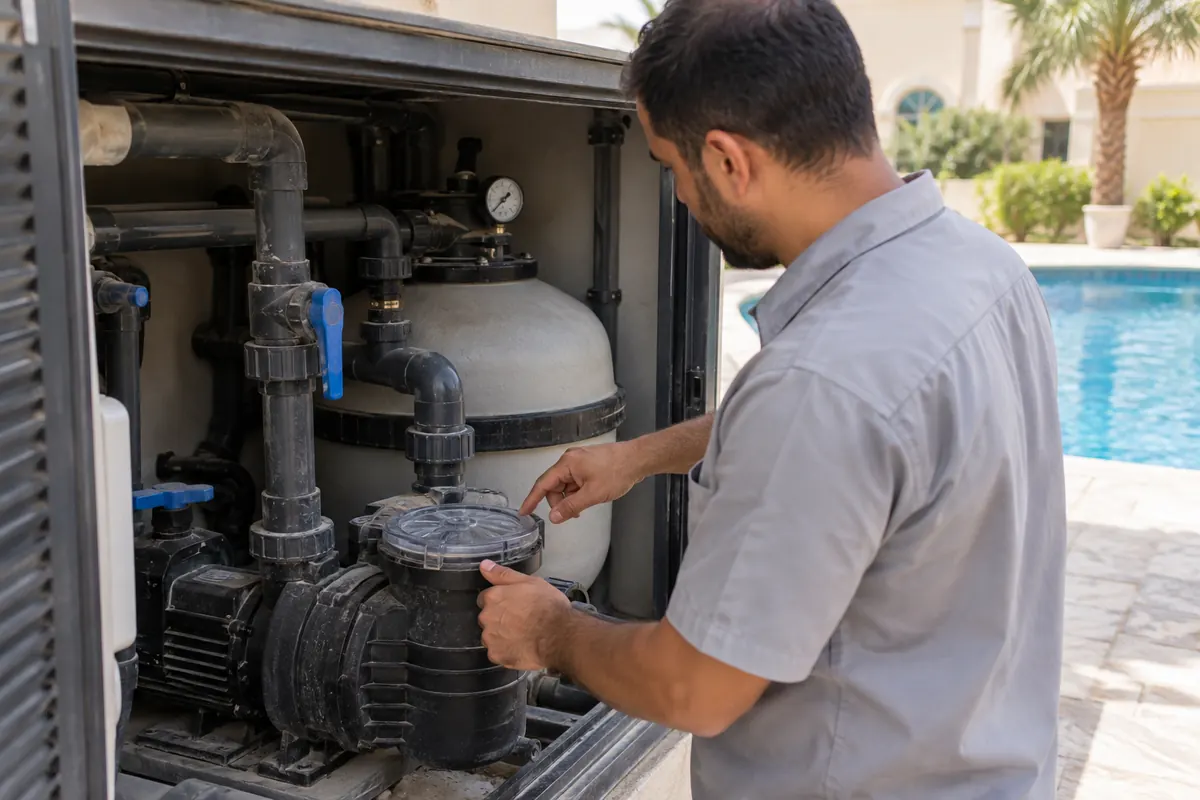
- Equipment makes unusual sounds
- A pump or other component appears to be faulty
- Pool surfaces are damaged
- The same buildup keeps returning
- The issue appears to be related to water conditions rather than physical dirt
At that point, the next step may involve pool maintenance, repair, equipment service, or another assessment.
When Should You Get Professional Pool Help?
Professional help may be useful when:
- Buildup cannot be removed safely
- Sand or debris keeps returning
- Water stays cloudy after normal cleaning
- Circulation seems weak
- A leak appears
- Equipment behavior changes
- Pool surfaces appear damaged
- The same problem keeps returning
- You cannot tell whether the issue is cleaning, maintenance, or repair
Describe what you can see instead of trying to diagnose a technical fault yourself.
Useful details include:
- Property type
- Dubai area
- Pool type where known
- Type of debris
- Whether the water looks cloudy
- Whether the problem is new or recurring
- Whether equipment behavior has changed
Frequently Asked Questions
What is the correct order to clean a pool?
First, inspect the pool. Next, remove surface debris. Then, brush the walls and steps. After that, clean the floor. Vacuum where needed. Empty accessible skimmer baskets. Finally, check the pool again.
Can I clean my pool myself?
Basic physical cleaning may be possible, such as removing debris and brushing accessible surfaces. Technical equipment work and chemical treatment should not be treated as simple DIY cleaning.
How often should a pool be cleaned in Dubai?
There is no one interval for every pool. Cleaning needs depend on pool use, visible debris, outdoor exposure, weather, and how quickly dirt returns.
Why does my pool get dirty so quickly?
Dust, sand, leaves, landscaping, weather, and pool use can all add debris. If the same dirt returns unusually quickly, another pool system issue may also need attention.
What should I check after a sandstorm?
Check the surface, floor, walls, steps, corners, skimmer baskets, and water appearance. Sand and dust can settle at the bottom even when the surface appears clean.
Is cloudy pool water always caused by dirt?
No. Cloudiness can also come from issues with filtration, circulation, water treatment, equipment, or other pool problems.
Is pool cleaning the same as pool maintenance?
No. Cleaning focuses mainly on removing physical dirt and debris. Maintenance covers a wider range of system care.
Should the pool floor be cleaned even if the water surface looks clear?
Yes. Sand, dust, and other debris can settle on the floor even when little material is floating on the surface.
What are common pool cleaning mistakes?
Common mistakes include only cleaning the surface. Many ignore walls and floor debris. Leaving baskets full is another issue. Also, some think every cloudy water problem can be fixed by just cleaning.
When is Pool Cleaning Not Enough?
Cleaning might not suffice if: Cloudiness persists; Circulation is weak; Equipment seems faulty; Leaks are present; The same issue keeps coming back.
Need Help With Pool Cleaning?
If your pool in Dubai has sand, debris, dirty surfaces, or cloudy water, let us know. Please share the property type, your Dubai area, the pool type if you know it, and any issues you have noticed with RapidixHome.
This can help identify whether pool cleaning, maintenance, repair, or another pool service may be relevant.