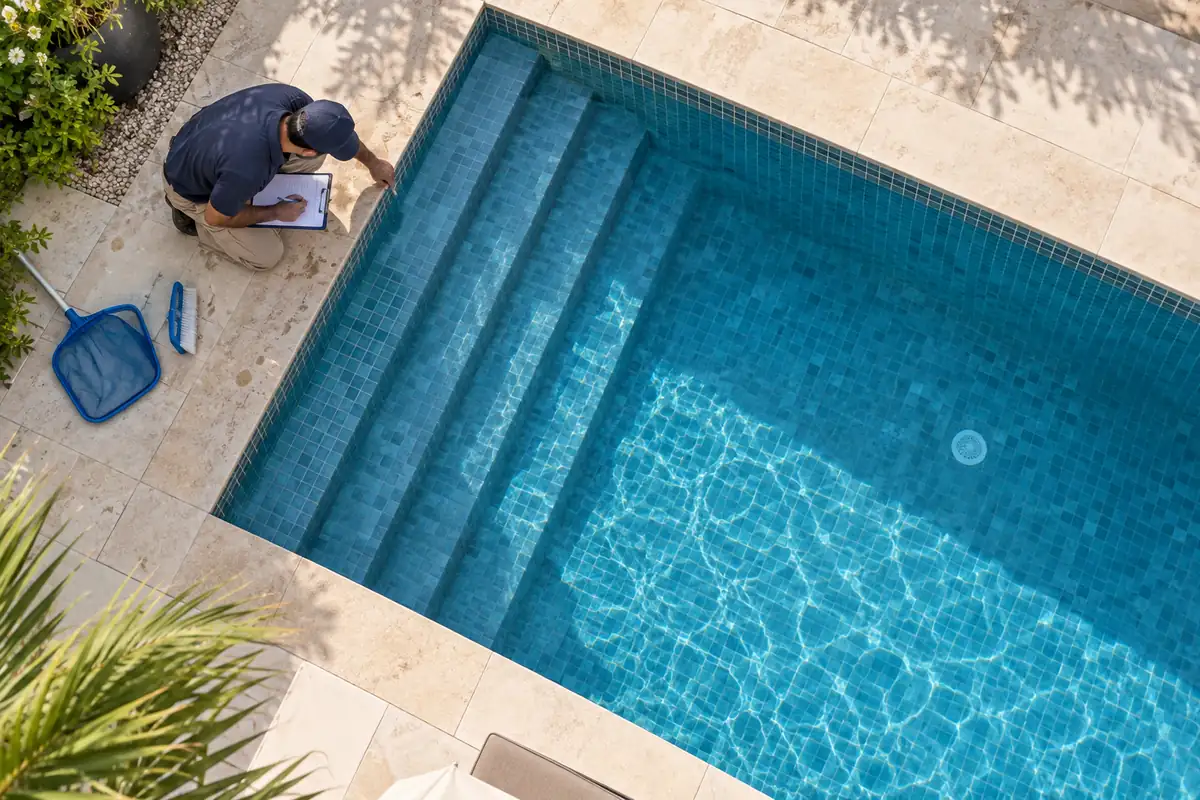


You do not need to diagnose every pool problem yourself. Check the visible condition of the water, surfaces, circulation, and equipment. Then note anything that looks different from normal.
Quick Pool Maintenance Checklist
Use this checklist when reviewing your pool:
- Check the water's appearance
- Check the water level
- Look for surface debris
- Check the pool floor
- Inspect walls, steps, tiles, and corners
- Check accessible skimmer baskets
- Observe water circulation
- Listen for unusual equipment sounds
- Look for visible leaks
- Check pool surfaces and edges
- Note problems that keep returning
- Recheck after heavy dust or a sandstorm
The main question is:
Has anything changed from the pool's normal condition?
Check the Water Appearance
Look at the water before focusing on the equipment.
Watch for:
- Unexpected cloudiness
- Unusual color
- Visible particles
- A clear change from normal appearance
Cloudy water does not tell you the exact cause. The issue may involve physical debris, filtration, circulation, water treatment, or another part of the pool system.
If the same change keeps returning, further maintenance may be needed.
Check the Water Level
Observe whether the water level looks normal for the pool.
Pay attention to:
- A level that seems to drop unusually fast
- The same water loss happening repeatedly
- Wet areas near the pool or equipment
- Visible water around pipes or fittings
A lower water level does not automatically prove that there is a leak. Look at the pattern and other visible signs before assuming the cause.
Check for Surface Debris
Look for:
- Leaves
- Dust
- Insects
- Sand
- Other floating debris
For maintenance purposes, ask whether more debris is collecting than usual.
The cleaning process itself belongs to routine pool cleaning. Here, the goal is to notice whether the condition has changed.
Check the Pool Floor
The water surface may look clear while sand or dirt has settled below.
Look for:
- Sand
- Settled debris
- Leaves
- Unusual buildup
- Stains
- Visible surface damage
If the same material returns quickly after cleaning, record it as a recurring problem.
Check Walls, Steps, Tiles, and Corners
Inspect accessible pool surfaces for:
- Visible deposits
- Repeated buildup
- Cracked tiles
- Loose finishes
- Damaged grout where visible
- Unusual stains
- Broken or sharp areas
Dirt may only need cleaning. Cracks, loose finishes, or repeated surface damage may need inspection or repair.
Check Accessible Skimmer Baskets
Look at accessible collection areas without dismantling equipment.
Check:
- How much debris has collected
- Whether baskets are filling faster than normal
- Whether visible damage is present
A sudden increase in debris may simply follow windy weather or nearby landscaping. If the change keeps happening, note it.
Check Water Circulation
Observe how water appears to move around the pool.
Ask:
- Does circulation look normal?
- Does one area appear weaker than before?
- Has water movement changed?
- Are some areas unusually still?
A circulation change is a useful warning sign.
It does not, by itself, tell you whether the problem is the pump, filter, pipes, or another component.
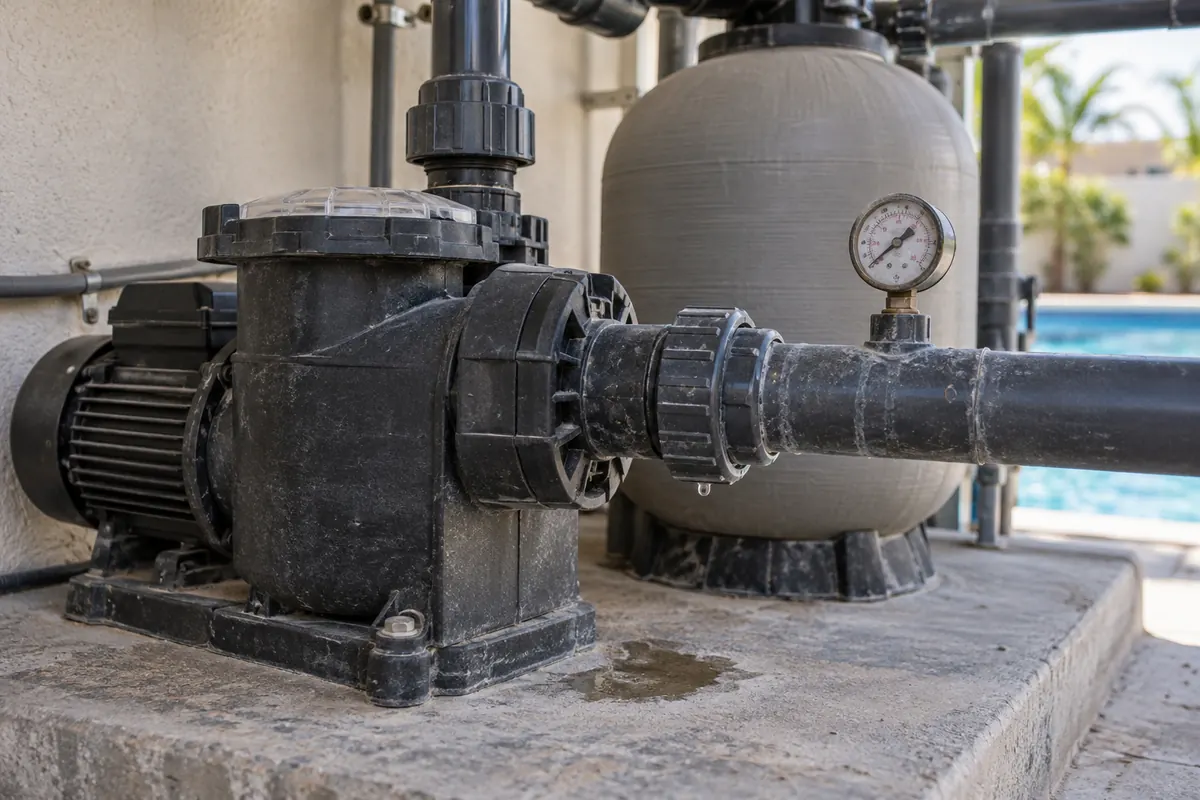
Check Pool Equipment for Warning Signs
You can notice many pieces of equipment change without opening anything.
Look or listen for:
- New or unusual sounds
- Visible leakage
- Equipment stops unexpectedly
- Visible damage
- Behavior that differs from the normal
Do not open pumps, filters, or electrical parts simply to complete a checklist. A change in equipment behavior may need a professional assessment.
Check Pool Surfaces and Edges
Also inspect the areas around the water.
Look for:
- Cracked tiles
- Loose finishes
- Broken edges
- Sharp areas
- Visible structural damage
- Changes since the previous check
These are maintenance or repair signals rather than simple cleaning issues.
What Should You Check After Heavy Dust or a Sandstorm?
After heavy dust or a sandstorm, check:
- Water surface
- Pool floor
- Walls and steps
- Corners
- Skimmer baskets
- Water appearance
- Accessible equipment areas
The purpose is not to repeat the full cleaning process.
It is to see how much the pool's condition has changed and whether extra cleaning or further maintenance may be needed.
Pay Attention to Problems That Keep Returning
Recurring problems are often more useful than one-time observations.
Watch for repetition:
- Cloudy water
- Fast debris buildup
- Weak circulation
- Water-level changes
- Equipment noise
- Visible leakage
- Surface buildup
- Damaged finishes
If the same issue returns after cleaning or maintenance, record when it happens and what was done beforehand.
Repeated symptoms may show that the underlying cause still needs attention.
What Are Common Pool Maintenance Checklist Mistakes?
Avoid these common mistakes:
- Checking only the water's surface
- Ignoring the pool floor
- Forgetting walls and corners
- Ignoring equipment behavior
- Assuming cloudy water only means dirt
- Assuming every water level drop means a leak
- Ignoring recurring problems
- Waiting until equipment completely stops
- Treating technical work as basic DIY maintenance
The purpose of a checklist is to spot changes, not to repair every problem yourself.
What Should You Record During a Pool Check?
Keep simple notes.
Record:
- Date
- Area affected
- What changed
- Water appearance
- Water-level changes
- Equipment behaviour
- Visible leaks or damage
- Whether the problem is new or recurring
- Recent cleaning or maintenance
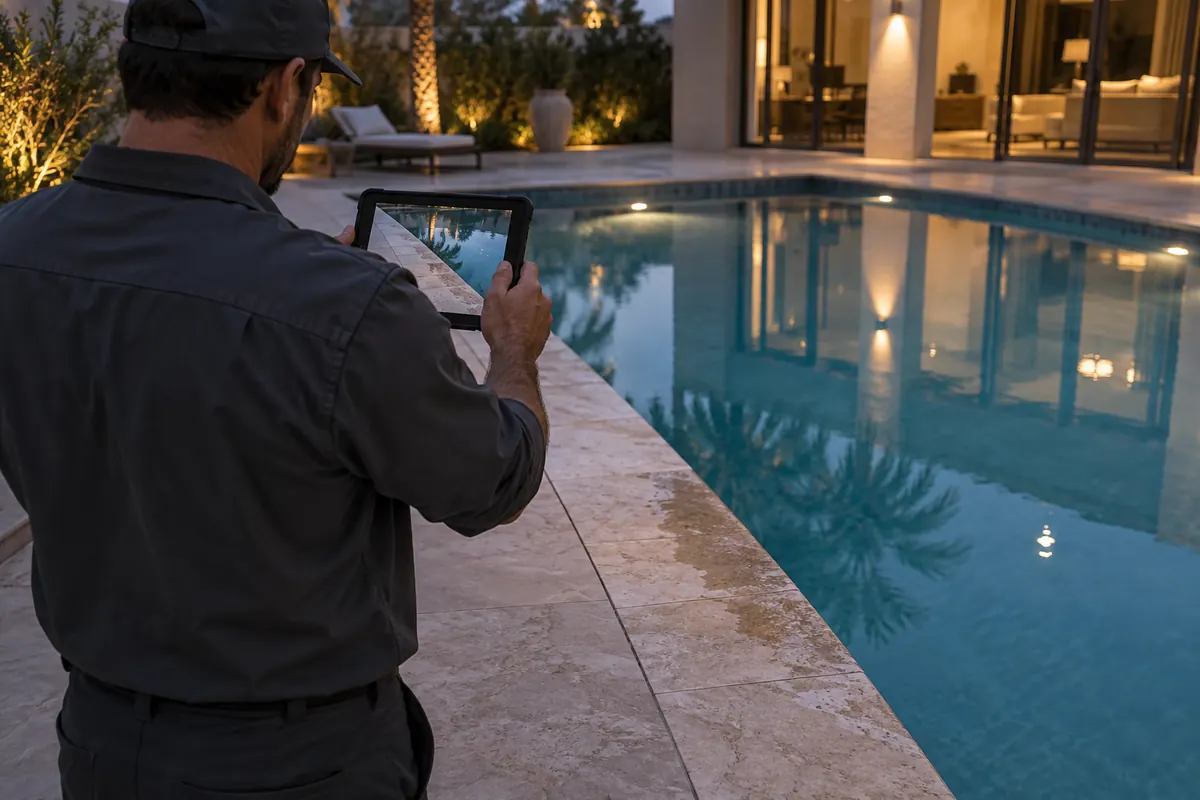
Photos can also help when a condition changes over time; this creates a useful maintenance history.
How Often Should You Check Your Pool?
There is no single inspection schedule that fits every pool.
How often checks are useful can depend on:
- Pool use
- Outdoor exposure
- Weather
- Visible condition
- Nearby landscaping
- Property guidance
- Previous maintenance history
An extra check may also be useful after heavy dust, unusual weather, a change in water appearance, or another new symptom.
Is Pool Cleaning Part of Pool Maintenance?
Yes, but the two are not the same.
Pool cleaning focuses mainly on physical dirt and debris, such as leaves, sand, dirty surfaces, and materials in baskets.
Pool maintenance is broader; it also considers:
- Circulation
- Filtration
- Equipment behaviour
- Water condition
- Leaks
- Surface condition
- Recurring problems
A pool can look clean and still have a maintenance issue.
What Can You Safely Check Yourself?
Basic observation may include:
- Water appearance
- Surface debris
- Pool floor
- Walls and steps
- Skimmer baskets
- Water level
- Equipment sounds
- Visible leaks
- Pool surface condition
Do not treat these as basic checklist tasks
- Electrical work
- Pump repair
- Internal filter work
- Chemical dosing
- Equipment dismantling
- Technical leak testing
When Should the Checklist Lead to Professional Pool Maintenance?
Professional attention may be relevant when:
- Cloudiness keeps returning
- Circulation changes
- Equipment behavior changes
- Visible leaks appear
- Unusual water loss continues
- Pool surfaces are damaged
- Equipment repeatedly makes unusual sounds
- The same problem returns after previous work
- You cannot tell whether cleaning, maintenance, equipment service, or repair is needed
You do not need to diagnose the exact fault first. Describe what changed and whether it is new or recurring.
Frequently Asked Questions
What should be included in a pool maintenance checklist?
Check water appearance; Monitor water level; Remove surface debris; Inspect the pool floor, walls, and steps; Clean skimmer baskets; Ensure proper circulation; Assess visible equipment condition; Look for leaks; Examine pool surfaces; Note recurring problems.
What parts of a swimming pool should I check regularly?
Check the water, floor, walls, steps, baskets, circulation, visible equipment, water level, and pool finishes.
How often should I inspect my pool?
There is no one interval for every pool. Pool use, weather, outdoor exposure, visible condition, and maintenance history can all affect when checks are useful.
What should I check after a Dubai sandstorm?
Check the water surface, floor, walls, steps, baskets, water appearance, and accessible equipment areas for changes.
Is cloudy water always a cleaning problem?
No. Cloudiness may also involve filtration, circulation, water treatment, or another pool system issue.
How can I tell if my pool may have a leak?
Recurring wet areas, visible pipe leakage, water around equipment, and unusual water-level changes may justify further checking. Water-level change alone does not confirm a leak.
What signs suggest pool equipment needs attention?
Look for unusual sounds, leaks, sudden stops, visible damage, or any changes in how the equipment works. These can indicate problems.
What recurring pool problems should not be ignored?
Don’t overlook repeated cloudiness, weak circulation, unusual water loss, visible leaks, equipment noise, and recurring surface damage. These issues need further attention.
Is pool cleaning part of pool maintenance?
Yes, cleaning is a key part of maintenance. Pool maintenance also looks at equipment, circulation, filtration, leaks, surface care, and ongoing problems.
When should I get professional pool maintenance?
Get professional help if a problem keeps coming back, equipment acts oddly, leaks or damage show up, or you can’t figure out what type of pool service you need.
Need Help With a Pool Maintenance Problem?
If your Dubai pool has cloudiness, circulation issues, visible leaks, or unusual water loss, let RapidixHome know. Please share your property type, Dubai area, and pool type, along with any specific issues you've noticed.
This will help us determine if you need pool cleaning, maintenance, equipment service, repair, or something else.